| Cary Grant - traditional style |
![]() |
| What style elements do you like? |
A mature search for style. Fashion and menswear for all men.
| Cary Grant - traditional style |
![]() |
| What style elements do you like? |
Increasing summer heat means that the search is on for fabrics that are cool, stylish and, for holiday use in particular, easy to maintain. A cloth that has become a summer favourite for me is seersucker.
![]() |
| Gregory Peck wears seersucker as Atticus Finch in To Kill a Mockingbird 1962 |
Tailoring is becoming less structured and more comfortable. Linen is popular for summer but can be hard to look after as a tailored linen garment is best dry cleaned. A better choice is seersucker. Easily maintained (it can be washed in cool water, more below) and relatively crush-free, seersucker is ideal for travel in warmer climes where a lightweight, airy, and relatively crushproof cloth is essential. While remaining crisp and elegant in the heat seersucker develops a slightly lived in look which Gregory Peck displays to perfection in To Kill a Mockingbird (see above).
Originally from India, it was introduced to Europe on the eighteenth century and while we now associate it with the USA (where it started out as workwear for the poor but later became an essential part of a preppy summer outfit), it was originally adopted by the British and other Europeans for wear in hotter climes.
Seersucker is woven from cotton, linen or manmade fibres, although I suggest you avoid the latter. Some years ago I was loaned a seersucker suit. It looked great; navy blue, double breasted with tapering trousers with turn ups. However, the cloth was made from a synthetic fibre which meant that on hot days it became almost unwearable: hot, damp and smelly. Natural fabrics, on the other hand, remain breathable and comfortable.
The cloth is woven at varying tensions so that it has alternating puckered stripes which are said to lift the material away from the body, allowing cooling and drying air to circulate; whether this is a valid scientific explanation I don't know. Certainly seersucker is light in weight and I find it cooler to wear than medium-weight linens, even though it has a tighter weave. Its slight elasticity adds to its comfort.
We tend to associate seersucker with blue or grey and white stripes, but it's available in plain colours and a wide variety of stripes (see below).
![]() |
| Cecil Beaton wears Anderson & Sheppard seersucker in 1936 |
![]() |
| David Hockney 1967 |
![]() |
| James Stewart in seersucker, Spencer Tracy in linen |
![]() |
| Miles Davis in seersucker |
![]() |
| Wearing seersucker |
Monk strap shoes tend to be overlooked in favour of oxford, derbies, sneakers and loafers, but they offer both comfort and style and are worth your consideration when next buying shoes for casual or formal use.
| I wear Loake Medway suede monks (socks Peper Harow) - all made in England |
I acquired my first pair (pictured above) only two or three years ago when I was looking for something a little different. A suede pair of single strap monks made in England by Loake, they have proved invaluable worn with everything from tweed, through formal suits to knitwear and jeans.
If you search for the history of the monk strap shoe you find references to medieval monks, but how this led to the adoption of the name for the shoe isn't clear. The general view seems to be that the style was developed in its present form early in the last century. Presumably the style reminded people of the strapped closed toed shoes that monks wore when their open-toed sandals were impractical for work outdoors as they let in stones and mud.
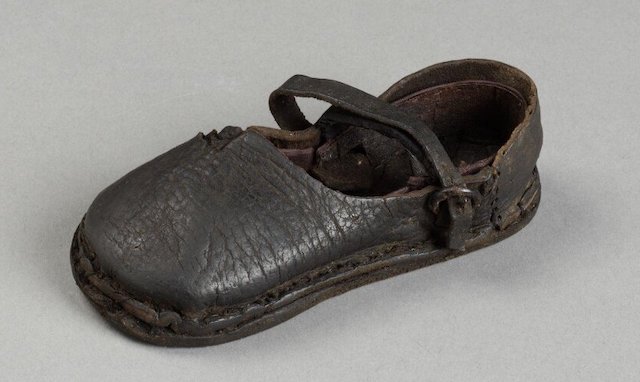
I found an image (below) of a late 15th / early 16th century child's shoe from London's Victoria & Albert Museum which shows that buckled straps have been around for centuries. Although this is a shoe for a toddler, you can imagine monks wearing similarly simple but practical footwear.
![]() |
| Child's strapped shoe late 15th/early16th century. Image V&A London |
![]() |
| I'm wearing Loake single monk straps in black calf and suede |
![]() |
| Double & single monk straps (Loake Shoemakers) I wear the black pair with formal evening wear |
With thanks to Loake Shoemakers for supplying the shoes and some of the images for this feature.
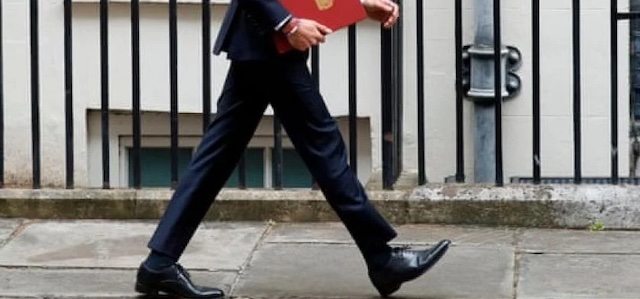
There has been much discussion about the sartorial tastes of Britain's latest Prime Minister, Rishi Sunak. His close fitting suits with cropped jackets and ankle length trousers proved controversial with some (see end of this feature), but his preference for having his trouser cuffs above his ankle bone is a reflection of the upward trajectory of trouser lengths over the last few years.
While I personally wouldn't wear mine quite so short, I'd argue that the look is preferable to the trouser style of the former US President, Trump, whose trousers fold around his ankle and over his shoes - a look that is mercilessly untidy and unflattering.
![]() |
| Comparing trouser lengths, Sunak and Trump |
The Ideal Trouser Length
So what is the ideal length for your trousers (or pants if you are from across The Pond)? As ever with matters of style, it's a matter of personal preference, but, as the above photos suggest, a shorter trouser length gives a cleaner look. Too short can give the appearance of a schoolboy who has outgrown his uniform, just as too long can give the opposite impression, that of the schoolboy whose parents are careful with money so have bought an oversize pair to ensure they last longer. There is a careful balance to be struck.
Guidance about trouser lengths usually discusses the 'break', the fold(s) caused by the cuff lying on the shoe. Significant breaks are now less often seen on those who profess to style. Trousers which taper nicely to a minimal or no break flatter the wearer, increasing the apparent of leg length and giving a neater look. Rishi Sunak is 1.7m (5' 7") and his shortened trousers with their clean line, to my eye, give him added apparent height.
![]() |
| My favoured trouser lengths |
Turnups (or cuffs)
I've been having turn ups on my trousers for the last few years and, while I'm beginning to tire of them, this seems a good opportunity to share my thoughts on them. They do finish off more formal trousers nicely but I would avoid them on casual trousers as they fill with debris when worn on country walks. Jeans are hard to shorten without losing the stitching at the cuff (unless you're a dab hand with a sewing machine) so I tend to roll them up. Historically jeans were always sold at standard lengths so folding up the cuffs is a long and honourable tradition.
I wear my turn ups 2" deep. For those with slightly longer legs this works well, but for those with shorter legs I'd suggest 1.5" or 1.75" as deeper cuffs have a leg shortening effect.
Cropped Trousers
Cropped trousers, ending a couple of inches or more above the shoe, are a separate issue and are more of a fashion statement. They are associated in my mind (quite acceptably) with sockless summer wear with loafers, trainers or sandals or with the now rather overdone look of brogues on sockless feet. Cropped trousers look best with casual wear but many (such as Rishi Sunak) wear them tailored with suits and blazers where they give a more contemporary than classic look.
![]() |
| Cropped trousers / pants - image The Sartorialist |
From time to time people contact me to complain about one or other aspect of a look that I've posted on Instagram. The last I received ticked me off for wearing a cardigan with the bottom button done up; and I suspect they were serious. This got me thinking generally about the 'rules' of style.
![]() |
| Image Whitfield & Ward Tailors who overlook the bottom button 'rule' for good reasons (see below) |
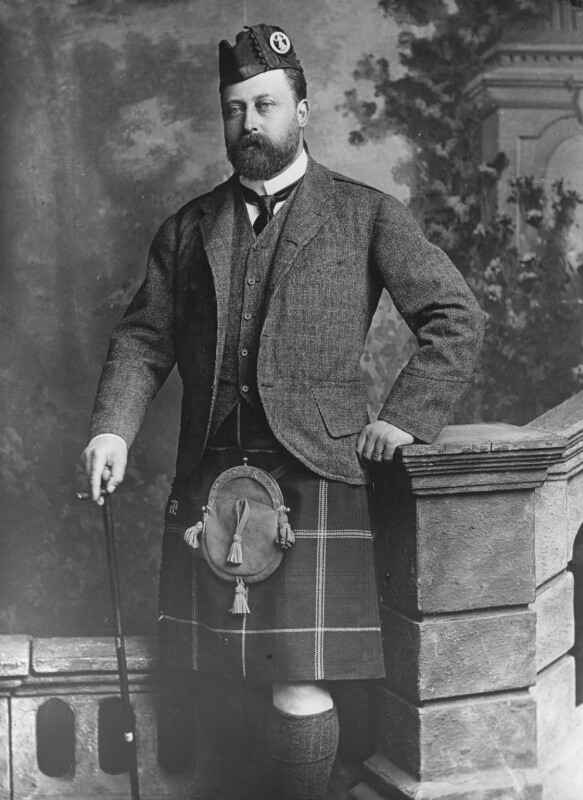
There is a convention that the bottom button of a waistcoat (or vest to use its original name - still used in the US) is left undone. Several explanations can be found for this tradition. The most common is that King Edward VII's courtiers undid theirs to emulate their sovereign whose ample girth prevented him doing up every button of his waistcoat. It was perhaps a matter of etiquette: respect or politeness. As that particular King is long dead the convention could be said to have long lapsed.
Whatever the origins of the habit, there is no 'rule' that demands that you leave said button undone. Look at the image below of a slim Edward VII (taken in 1882), what do you notice about the buttoning of his waistcoat / vest?
![]() |
| Edward VII Image National Portrait Gallery London |
Waistcoats are often cut so that the bottom button can't be done up without affecting the line of the garment. That's a result of the convention. This is good enough reason to leave it undone; the cut makes it hard to do otherwise. My advice would be that, if the waistcoat is cut so that the bottom button can be done up, do just that. It will help cover your waistband and also look tidier (see the above image by Whitfield & Ward, Tailors (link below) - doesn't that look neat?)
But however you want to play that one, there is no law, rule, etiquette, convention or tradition (going back to the recent complaint that I received) that demands that the bottom button of a cardigan be left unsecured. We often see buttons on cardigans (sleeved or sleeveless) left undone. This may be because the buttonholes have stretched and the buttons pop open, or it's an attempt at sprezzatura or in confusion over the waistcoat 'rules'. Or it may be that the cardigan is worn by a genuine sartorialist who has found the best way to wear the garment to make it look as good as possible - read on....
"If there are rules of style they are simply that you should wear clothes in a way that makes both the garment and you, the wearer, look as good as possible"
If there are any rules of style they are simply that you should wear clothes in a way that makes the garment look good and you, the wearer, feel comfortable. There are some ways of wearing clothes that look so bad that it's best to pretend there is a rule preventing them. Ties worn undone and at half mast look sloppy and it would look better to go tieless with collar undone. Wearing brogues without socks is a look has been overdone and is best avoided as it looks too studied. Wearing watches over shirt cuffs is just aping the style of Gianni Agnelli. Doing up the bottom button of a blazer or sports coat is inadvisable simply because doing so will usually spoil the line of the jacket because of its cut. But these are guidelines, not rules.
"The overarching question is not 'What is the rule?' but 'What looks best on you?'"
Good style arises from self confidence, wearing good quality clothes that fit well and, most importantly, not looking as if you've tried too hard. The best way to sprezzatura, the art of looking good without appearing to try, is to find your own style rather than copying slavishly what you see at Pitti Uomo or on Instagram or following irrational rules.
The overarching question is not 'What is the rule?' but 'What looks best on you?'
[With thanks to Whitfield & Ward, Tailors, for permission to use their image above. This is an unsponsored post.]
![]() |
| Older men with different styles - I'm with Svante @theurbanhippieswe |
![]() |
| Photo The Sartorialist |
For Autumn/Winter 2022 Ralph Lauren Polo (link below) say they honour their "roots of distinctive details, tradition in textiles, and time-honored tailoring". The two videos below show their collections for men and women. It's interesting to see the strong British influence that underlies the American Ralph Lauren brand: tweeds and cloths from British mills, country life and sports, mountains, rugby football, a classic Land Rover, the Aston Martin, a steaming cup of tea and the heritage of the English country house.
![]() |
| Ralph Lauren Shetland Tweed Jacket - Abraham Moon & Sons England cloth |
Ralph Lauren's preppy and Ivy League looks owe much historically to British styles. Ralph Lauren himself said in an interview with Esquire in 2014, "England has always inspired my style and designs, and my respect for things that have a quality the more they are worn. The British have a true appreciation for heritage and tradition...."
So, the U.S. Ralph Lauren brand oozes British menswear heritage and styles - what British brands do the same? See here for my thoughts on this question: British Style: Is It Time for a Revival?
The Italian word 'sprezzatura' perfectly describes that rather dishevelled but Oh-so-English look of a well-used tweed suit, as worn with such aplomb by so many men in the early half of the twentieth century. I came across the image below of author Evelyn Waugh which perfectly illustrates that casual, crumpled and unselfconscious English style. How can we emulate that comfortable tweedy appearance today?
![]() |
| Evelyn Waugh by Mark Gerson 1963 |
Waugh's suit appears to be a heavyweight tweed (they would normally have been fairly robust cloth in those days) in a shepherd check. As is normal with a well-worn-in tweed, it looks as comfortable as an old jumper and pair of jeans might be to us today. Men were used to wearing tailoring in those days, and Waugh would have thought nothing of throwing himself down on the sofa for a post-prandial nap fully clothed in his three-piece.
It's this slightly disordered but so natural and unforced look, the result of wearing a suit day in and day out, that's often admired in the English (or more strictly British) man of that era. Sadly today's man has largely abandoned tailoring in favour of casual wear or that mix of leisure and sports wear, 'athleisure', that, while possibly easy to wear, lacks elegance or style.
The art of wearing tailoring for relaxation has been lost and today it's felt that sloppy and shapeless is necessary for easy wear. Evelyn Waugh shows us that this is a mistaken view. Tweed is a casual cloth, designed originally for easy movement outdoors, retaining its shape and protecting the wearer from the elements. A good quality cloth is soft, robust and lightweight, moulding readily to the body. Its forgiving nature means that it doesn't need to be treated with care, like a flannel business suit.
Worn well the tweed suit combines effortless style with comfort. Let's buy more tweed suits (I suggest some sources of new and vintage tweeds below).
![]() |
| Waugh wears a houndstooth check tweed suit with a jaunty buttonhole |
The recent sight of David Hockney wearing yellow Crocs at an Order of Merit meeting at Buckingham Palace caused a stir in the Press. Crocs - in front of His Majesty!
As a man of style, King Charles took it all in his stride of course, commenting, "Your yellow galoshes! Beautifully chosen." But how significant is it that such a striking choice of footwear should make such an impact? Is it because many of us are now wearing menswear that is dingy, dark and dull; that we aren't used to seeing displays of sartorial sassiness in men?
How often does what we wear reflect our personalities rather than simply an acquired look or trend?
![]() |
| Light in the gloom. Hockney's Crocs (and the women) light up a monochrome OM luncheon meeting. |
The above image of those attending the Order of Merit luncheon shows how men's formal business wear is traditionally dark: black or dark blues predominate. This is nothing new. Since the early nineteenth century most men have avoided colour and bright pattern, a trend marked by Beau Brummell's choice of plain and sober clothing. Victorian men adopted darker hues to emphasise their serious, god-fearing and industrious approach to life.
This continued into the twentieth century and, while the sixties signalled as temporary shift to colour and pattern for the young in particular, we seem to have returned to a period when both young and old prefer darker clothing, whether for formal or casual wear. Look at any high street, where drab hoodies, quilted coats and jeans predominate. Maybe this is a reflection of the times. Do we feel that here isn't much to be cheerful about in the world at the moment and does this reflect in our sober choices of clothing?
Hockney's outfit at the OM luncheon is a welcome change. He has chosen to dress in a way that is comfortable and still reflects his character and interests. We may not all approve of the yellow Crocs, but the lighter coloured check tweed suit is a style that we could all adopt. Try patterned tweeds, bright knitwear, trousers in brighter hues, bold striped shirts and pastel contrasting socks to move away from this monochrome madness.
The suit has had a hard time over the two or three years, with many forecasting its demise. My own view (link below) is that the suit survives, albeit in a modified form and here setbacks provide opportunities. Select the right shirt and you can change a suit's look to make it more versatile, as I show you here.
I'm grateful to Thomas Pink shirts for sending me a denim and a chambray shirt to illustrate this feature.
![]() |
| Thomas Pink denim shirt |
![]() |
| Same suit; different looks. Chambray and denim shirts from Thomas Pink |
While the formal business suit is undoubtedly on the wane, suits with a more comfortable cut and cloth can be worn either formally or casually, as the opportunity demands. Take a tweed or Prince of Wales check suit: worn with smart oxford shoes, a crisp white shirt and madder silk tie it can be worn to a formal or work meeting, but wear it with loafers, a denim or chambray shirt, cravat or neckerchief and it becomes a comfortable option for a more casual look.
Denim and chambray reduce the formality of tailoring because they are both cloths with roots in workwear. Such shirts look more comfortable than a crisp business shirt made from a fine poplin, oxford or Sea Island cotton. As they age they soften and take on a patina of wear at the collar, seams and folds. A slight fraying at the edges adds to this comfortable look and is a godsend for those aiming to exude an air of sprezzatura*.
Denim or Chambray?
Denim and chambray are woven from two different coloured yarns, usually indigo and white, giving them their characteristic slubby appearance. They are woven differently: denim tends to be thicker than chambray and has a different appearance on each side of the cloth, while chambray looks the same each side. Denim tends to fade much more markedly and this makes it the more casual looking of the two, particularly with its association with workwear since the nineteenth century and earlier. Due to its lighter weight and breathability, chambray is better for warmer weather.
*Sprezzatura: 'Studied carelessness'.
The shirts used in this post were from Thomas Pink
It's an absolute delight for me to announce a collaboration with classic British brand, Cordings of Piccadilly. They are everything I love about British menswear. They've been around since 1839 and have remained true to their solid, practical, quality British heritage (see links below).
![]() |
| Wearing the Cordings x Grey Fox cord suit and wool check tie |
I've written before about British style and its influence on western menswear. From preppy American and Ivy League to contemporary Japanese street style, staples like tweed, corduroy suits, polo and covert coats and outdoor and country sportswear have become classics of style and fashion. Cordings' longstanding place in the heritage of British men's style makes it a great privilege to work with them to put together this small largely British-made collection.
The collection is designed to be the start of a capsule wardrobe. By this I mean that every can be paired with the others. Rich reds and natural green runs through the palette, with the textures of corduroy, brushed Shetland knits and earthy Loden holding it together and providing contrast and variety.
"...a code that allows for sophisticated creativity while remaining essentially formal"
![]() |
| Ideas for Cocktail Attire Dress Code for Summer and Winter |