• Style
    • Menswear
    • Accessories
    • Grooming
    • Style Inspiration
    • British Made
    • Collaborations
  • Lifestyle
    • Travel
    • Cars
    • Watches
    • Food & Drink
    • Arts
    • Events
  • People
  • UK-Made Menswear
  • About
  • Press

Grey Fox

A mature search for style. Fashion and menswear for all men.

Showing posts from category: menswear

Military Tailoring: Sarah Wilkinson's 40 Years at Dege & Skinner

Thursday, 19 October 2023

The year 2023 saw much ceremonial: the sad event of a royal funeral and the happier one of a coronation. The array of uniforms was dazzling. We tend to forget that their complexity relies on rare tailoring and sewing skills that deserve recognition. I wanted to mention just one of the crafts people responsible for some of the displays of magnificence. 

Sarah Wilkinson military tailor at Dege & Skinner of Savile Row

Dege & Skinner’s military tailoring specialist Sarah Wilkinson joined the bespoke tailoring and shirt-making company based in Savile Row in 1983. During her forty year career she has worked on some striking pieces of military tailoring including uniforms for the Royal Family, The Yeoman of the Guard, the Guards regiments and The Royal Company of Archers, which acts as the Sovereign’s official bodyguard in Scotland. She was a trailblazer for women working on Savile Row and has been forty years at Dege & Skinner, who hold the Royal Warrant for work on these specific and historic uniforms.

Sarah told me that, in her teens, she was determined to find an apprenticeship in tailoring but, as was the attitude in the early eighties, she was told many times that tailoring was a man's trade. She persevered and eventually was offered an apprenticeship my Michael Skinner, then Managing Director at Dege & Skinner, joining the company at the age of sixteen and starting in August 1983. 

The intricate work required to make a Yeoman of the Guard uniform

She trained in both military and civilian tailoring, from  making naval uniforms at the time of the Falklands War to attending the Queen's Birthday Parade and seeing the uniforms she had made being worn for The Trooping of the Colour.

Sarah began to specialise in military uniforms, attracted by the wide variety of technical skills required to produce their unique shapes, sew their quilted linings and attach the ornate braids with which they are often decorated.

Examples of Sarah’s work include: 
  • The Royal Lancers uniform that featured in Victoria & Albert Museum's 2014 exhibition titled 'What Is Luxury?' and now part of the official archive at the Museum. 
  • Prince Harry's wedding day frock coat when he married Meghan Markle in 2018; as well as the attending Page Boys who wore miniature versions of Prince Harry's Blues & Royals Mess Kit.
  • HRH Prince Louis' doeskin tunic that worn at the Coronation of His Majesty King Charles III in 2023.
Sarah Wilkinson shows more of her military tailoring work at Dege & Skinner

Sarah is always busy as their work is so niche and she finds herself making uniforms for non-military clients attracted by their colour, design and the skills involved in their construction. Above all she feels great pride in looking back over her work of 40 years, which has helped establish Dege & Skinner as a leading military as well as civilian tailor. As the owner of two bespoke suits from Dege & Skinner I can confirm the exceptional quality of their work.

With many thanks to Sarah Wilkinson and Dege & Skinner


Share:
Labels: British made, menswear, People, style

What is Style? How to Achieve Personal Style in Menswear

Thursday, 14 September 2023

What is style? Pinning down the meaning of the word is like trying to grab a piece of soap in the bath. When we describe a man as 'having style' we mean that he has good style. A man could have style that's appallingly bad, but we assume when we say that he 'has style' that it's good.

Leaving aside that that etymological quirk, let's attempt to identify what good style and is and how we achieve it. [Note that this is an update of an article that appeared here a few years ago].

Cary Grant - traditional style

Style is Multifactorial

What makes good style? It goes beyond how we appear and the clothes we wear. Proportion, colour, pattern act alongside how we move, behave to others and hold ourselves to add to a general impression. Style is multifactorial and this is why some men and women can wear an old bin bag and look good, while many of us struggle to do so with even good, well-made clothes.

What makes good style? What do you like/not like with these images? Are these men stylish?

What factors are relevant to finding style? I call them factors as I dislike setting 'rules' about style. I'm occasionally berated on Instagram for doing up this button or undoing that one, or wearing a tie too long or too short (see more on this in my post on The Rules of Style). Such expectations - rules if you like - are nonsense. Part of the pleasure of style is playing with its elements to find new looks. Just as a piece of music can be played in countless different ways, so a blue suit and tie with a white shirt can be worn in many ways which subtly differ. Playing with the elements of style enables these differences to be subtly adopted and used.

Here are what I see as some of the elements of style. I don't pretend that they're complete or accurate; we all learn as we go along.

Stand Proud

Standing and walking confidently is a good foundation to looking stylish. Clothes are designed to fit best when we are upright and that aura that self-confidence brings adds a to the overall impression.

In selecting clothes stay within your comfort zone so that you look happy with  your outfit. As you test out your preferences you'll feel more confident about your style and confidence brings that look of style and comfort with yourself.

Money Doesn't Buy Style

The richest are often the least stylish. While this doesn't apply to all, tasteless displays of wealth focus on bling rather than well-designed substance. A huge gold neck chain will never give the impression of sophisticated style that a discreet, well-designed vintage watch (which needn't cost much) can impart. 

Buy well-made, quality, well-designed clothing. Don't buy simply for the name. There's great pleasure to be had in finding a small business that makes excellent menswear that you love to wear - this is why I promote brands that made in Britain. You could end up spending less if you purchase wisely and well. 

Aim for a compact capsule wardrobe where a modest number of pieces work together to make a variety of looks that you feel good wearing, rather than filling your wardrobes with potential landfill.

The Devil's in the Detail

Exude style from every pore. Every aspect of a look counts. A superb suit will be nothing if worn with a cheap pair of shoes or a shapeless and boring topcoat. Every detail should shout style, design, quality, from your socks to your wristwatch.

Closely inspect a photograph of a look that you like. Look at the smaller elements; accessories like the watch, the pocket square; the colour of the socks, how patterns are made to play with each other in harmony or contrast. Colours are a powerful element; are they monochrome or contrasting, what hues work best together? Are the clothes brand new or do they have an attractive patina of wear and age? How are scarves and ties tied - carefully or with artful abandon? Do you prefer a regimented tidy look or a careful attempt at sprezzatura?

Whatever conclusions you come to, don't be shy of experimenting with ideas you adopt from elsewhere or using thoughts of your own.

Grooming

Good grooming is essential. Like shoes, a good haircut is vital as are clean nails and a generally scrubbed appearance. This isn't the same as looking tidy; an artfully unkempt look can be successful but has to be very carefully curated.

Personality

Style is about your character - it's not about slavishly following fashion. Fashion models seldom show their own style on the catwalk. Catch them after the show, dressed in their own clothes, and the picture is very different; they know how to dress well and reflect their own tastes and characters, showing true personal style.

It's important to stick to clothes that you feel comfortable wearing. I don't just mean physically comfortable, I also mean that we should never have to feel self-conscious in our clothes. 

Confidence is a large element of style. That's why some wear more outrageous, colourful or different clothes from the norm - they tend to have the confidence to make such looks work. In my experience, confidence comes with practice and experience. I wear clothes now that I would have felt uncomfortable with before I started my search for style nine years ago.

Your personality and tastes will change with time, so don't get stuck in a rut. Try new things, try to push out the boundaries of your comfort zone, without going beyond the personal bounds mentioned above. I've found that this opens up a wider choice of outfits and looks and I've occasionally found I like things that I thought I'd never wear (such as denim jackets!)

What style elements do you like?

Style isn't about imposing your own taste on others

How often do you see someone stylishly dressed, but you wouldn't choose to wear what they're wearing? The older man in double denim, the loud check suit, the orange knitwear - you may not like them, but the wearer looks great in them.

I'm surprised how often the Instagram audience is prepared to comment when they don't like something. Variety being the spice of life we should respect different styles. With an open mind we may even come to adopt elements of a look we had thought we didn't like. I never thought I'd like to wear a denim jacket, but a vintage example is now part of my wardrobe, often worn with tailored trousers and a roll neck or a linen shirt.

So, style is hard to define, but we know it when we see it. We sometimes disagree over what makes good style, but that's linked to our individual tastes. Thankfully we don't all like the same things. If we did, the world of style would be monochrome and boring and we would never develop our own likes and looks.

Finding inspiration

It's impossible to be totally original in your style choices so don't try to be something that's unique; that's simply never going to happen. There are only so many styles of garment and there's nothing that hasn't been tried before. Keep an eye on The Sartorialist, Scott Schuman's images got me started on the blog, and collect looks you like on Pinterest, using appropriate search terms to help you find looks you might like. 

The rise of the street style image, largely through the work of Schuman and others like him, has democratised style. Fashion has had to take second place to the choices of individuals whose personal tastes have, for a decade, driven style to become more diverse. Fashion is now inspired by street style. The dog now more obviously wags to tail, rather than the tail of fashion wagging the dog of individual style.

This has been fuelled by a rise in respect for personal choice. Gender is now fluid and masculinity no longer requires manly clothing. As prejudice is rightly condemned in so many spheres of life, so people feel freer to wear what they like. The increasing richness and variety being worn on our streets and captured by photographers gives a hugely inspiring source of ideas to anyone interested in searching for an effective personal style.

Use elements of these looks yourself, or even whole outfits if you wish. See what works on you (ask friends and partner for opinions) and stick to what you feel comfortable with. Gradually you will evolve an understanding of your own style.

Good luck with your search for style. Mine has lasted twelve years (I started late in life) and continues. With experience I now know what I like and what works - some of the time. The search for style is never-ending.

******

In the companion part of 'What is Style?" I ask my favourite personal stylist, Sarah Gilfillan of Sartoria Lab, to give her views on style. She helps men select stylish clothes for a living and has much experience and many useful thoughts on the topic. Read 'What is Style? How to be Stylish' by Sarah Gilfillan here.
Share:
Labels: menswear, style, style inspiration

Vintage Polo by Ralph Lauren Tie

Friday, 8 September 2023

This tie came from @vintageprl  who, from time to time, sells high quality vintage Ralph Lauren through his Instagram account.

It's just over 4" at its widest and is labelled Neiman-Marcus, a store founded in Dallas Texas in 1907 and which started to stock Ralph Lauren products in the late sixties (starting, I believe, with ties) and still sells them today. I don't know the date of this tie, but would guess seventies.


Share:
Labels: accessories, menswear, style

Seersucker: Summer Style

Tuesday, 1 August 2023

Increasing summer heat means that the search is on for fabrics that are cool, stylish and, for holiday use in particular, easy to maintain. A cloth that has become a summer favourite for me is seersucker.

seersucker suit
Gregory Peck wears seersucker as Atticus Finch in To Kill a Mockingbird 1962

Tailoring is becoming less structured and more comfortable. Linen is popular for summer but can be hard to look after as a tailored linen garment is best dry cleaned. A better choice is seersucker. Easily maintained (it can be washed in cool water, more below) and relatively crush-free, seersucker is ideal for travel in warmer climes where a lightweight, airy, and relatively crushproof cloth is essential. While remaining crisp and elegant in the heat seersucker develops a slightly lived in look which Gregory Peck displays to perfection in To Kill a Mockingbird (see above).

Originally from India, it was introduced to Europe on the eighteenth century and while we now associate it with the USA (where it started out as workwear for the poor but later became an essential part of a preppy summer outfit), it was originally adopted by the British and other Europeans for wear in hotter climes.

Seersucker is woven from cotton, linen or manmade fibres, although I suggest you avoid the latter. Some years ago I was loaned a seersucker suit. It looked great; navy blue, double breasted with tapering trousers with turn ups. However, the cloth was made from a synthetic fibre which meant that on hot days it became almost unwearable: hot, damp and smelly. Natural fabrics, on the other hand, remain breathable and comfortable.

The cloth is woven at varying tensions so that it has alternating puckered stripes which are said to lift the material away from the body, allowing cooling and drying air to circulate; whether this is a valid scientific explanation I don't know. Certainly seersucker is light in weight and I find it cooler to wear than medium-weight linens, even though it has a tighter weave. Its slight elasticity adds to its comfort.

We tend to associate seersucker with blue or grey and white stripes, but it's available in plain colours and a wide variety of stripes (see below). 


And of course seersucker has been worn by the congenitally cool for many years, as can be seen from this selection of images:

Cecil Beaton wears Anderson & Sheppard seersucker in 1936

David Hockney seersucker
David Hockney 1967


Seersucker Jimmy Stewart
James Stewart in seersucker, Spencer Tracy in linen

Miles David seersucker
Miles Davis in seersucker

So, seersucker provides a summery alternative to linen. Both have similar casual, slightly rumpled, preppy looks. The choice between them is down to personal taste. Many dislike the wrinkled nature of linen: while seersucker rarely looks too crushed. Linen has a looser weave and, if not too heavy, ventilates better than seersucker - but the latter is a lighter weight cloth so doesn't seem to retain heat as much as linen while still protecting against the heat of the sun. 

In terms of maintenance, seersucker seems to hide stains more effectively than linen, especially if striped or checked. Seersucker (unlike linen which will need dry cleaning) can in theory be  washed in water, but linings may complicate this, so check the washing instructions. Despite these considerations, I have no preference between linen and seersucker and wear whichever I am in the mood to wear on a particular day. I do prefer seersucker for travel as it's so easy to look after and is relatively crease-free

Try mixing seersucker with other cloths: seersucker trousers with a linen or lightweight wool blazer or vice versa, a seersucker jacket with shorts or trousers from a contrasting colour summery cloth.

seersucker style summer shorts
Wearing seersucker

I own two seersucker suits. A navy blue suit was made to measure some years ago by King & Allen. The striped suit shown below was off the peg (altered to fit) from MbE at Grey Flannel. This is the cooler to wear of the two as the jacket is unlined, single breasted and loosely cut to ensure ventilation. The navy blue suit has a partly lined, double breasted jacket, making it slightly warmer to wear on a hot day - but it looks great as a more formal, warm weather work suit. 

Both are worn regularly as separates, indeed, the casual nature of seersucker means that you don't so much buy a suit as matching jacket and trousers - the future of the suit indeed (see my feature "Will The Suit Survive?")


Share:
Labels: menswear, style, style inspiration

Monk Straps: The Cinderella of Shoes?

Monday, 13 March 2023

Monk strap shoes tend to be overlooked in favour of oxford, derbies, sneakers and loafers, but they offer both comfort and style and are worth your consideration when next buying shoes for casual or formal use. 

I wear Loake Medway suede monks (socks Peper Harow) - all made in England

I acquired my first pair (pictured above) only two or three years ago when I was looking for something a little different. A suede pair of single strap monks made in England by Loake, they have proved invaluable worn with everything from tweed, through formal suits to knitwear and jeans.

If you search for the history of the monk strap shoe you find references to medieval monks, but how this led to the adoption of the name for the shoe isn't clear. The general view seems to be that the style was developed in its present form early in the last century. Presumably the style reminded people of the strapped closed toed shoes that monks wore when their open-toed sandals were impractical for work outdoors as they let in stones and mud. 

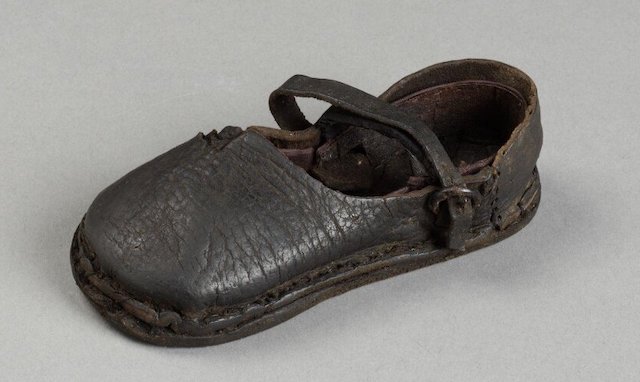
I found an image (below) of a late 15th / early 16th century child's shoe from London's Victoria & Albert Museum which shows that buckled straps have been around for centuries. Although this is a shoe for a toddler, you can imagine monks wearing similarly simple but practical footwear. 

Child's strapped shoe late 15th/early16th century. Image V&A London

Advice on the web suggests that the monk strap shoe is semi-formal, somewhere between the oxford (formal) and derby (less so) with the double monk, which has two buckles on each shoe (see images below) being the more casual. Monks come in all sorts of leather and those in suede or with a brogued finish will be at the more casual end of the spectrum, while a plain pair in black calf would be ideal for more formal wear.

I'm wearing Loake single monk straps in black calf and suede

It's generally said that monks shouldn't be used with very formal wear such as black tie. I disagree. A single strap monk in polished black is an elegant and simple addition to evening wear. It's not uncommon to see men wearing monogrammed velvet slippers and even patent leather loafers with black tie so it's hard to understand how a simple, smart and stylish pair of highly polished monk shoes should be the cinderella at the ball.

Double & single monk straps (Loake Shoemakers)
I wear the black pair with formal evening wear

Click here to find out about the Loake English-made monk strap shoes.

With thanks to Loake Shoemakers for supplying the shoes and some of the images for this feature. 

Share:
Labels: accessories, British made, menswear, style, style inspiration

A Guide to Perfect Trouser Leg Length

Saturday, 25 February 2023

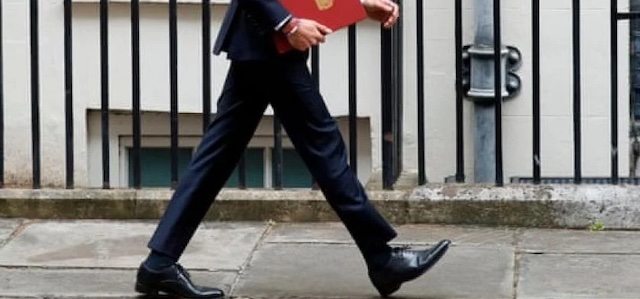
There has been much discussion about the sartorial tastes of Britain's latest Prime Minister, Rishi Sunak. His close fitting suits with cropped jackets and ankle length trousers proved controversial with some (see end of this feature), but his preference for having his trouser cuffs above his ankle bone is a reflection of the upward trajectory of trouser lengths over the last few years. 

While I personally wouldn't wear mine quite so short, I'd argue that the look is preferable to the trouser style of the former US President, Trump, whose trousers fold around his ankle and over his shoes - a look that is mercilessly untidy and unflattering.

Comparing trouser lengths, Sunak and Trump

The Ideal Trouser Length

So what is the ideal length for your trousers (or pants if you are from across The Pond)? As ever with matters of style, it's a matter of personal preference, but, as the above photos suggest, a shorter trouser length gives a cleaner look. Too short can give the appearance of a schoolboy who has outgrown his uniform, just as too long can give the opposite impression, that of the schoolboy whose parents are careful with money so have bought an oversize pair to ensure they last longer. There is a careful balance to be struck.

Guidance about trouser lengths usually discusses the 'break', the fold(s) caused by the cuff lying on the shoe. Significant breaks are now less often seen on those who profess to style. Trousers which taper nicely to a minimal or no break flatter the wearer, increasing the apparent of leg length and giving a neater look. Rishi Sunak is 1.7m (5' 7") and his shortened trousers with their clean line, to my eye, give him added apparent height.

My favoured trouser lengths

Turnups (or cuffs)

I've been having turn ups on my trousers for the last few years and, while I'm beginning to tire of them, this seems a good opportunity to share my thoughts on them. They do finish off more formal trousers nicely but I would avoid them on casual trousers as they fill with debris when worn on country walks. Jeans are hard to shorten without losing the stitching at the cuff (unless you're a dab hand with a sewing machine) so I tend to roll them up. Historically jeans were always sold at standard lengths so folding up the cuffs is a long and honourable tradition.

I wear my turn ups 2" deep. For those with slightly longer legs this works well, but for those with shorter legs I'd suggest 1.5" or 1.75" as deeper cuffs have a leg shortening effect.

Cropped Trousers

Cropped trousers, ending a couple of inches or more above the shoe, are a separate issue and are more of a fashion statement. They are associated in my mind (quite acceptably) with sockless summer wear with loafers, trainers or sandals or with the now rather overdone look of brogues on sockless feet. Cropped trousers look best with casual wear but many (such as Rishi Sunak) wear them tailored with suits and blazers where they give a more contemporary than classic look. 

Cropped trousers / pants - image The Sartorialist

And finally, below I cheekily reproduce a post from my Instagram grid from October 2022. Click here to see some of the wonderful (and less so) comments:


Share:
Labels: menswear, style, style inspiration

The Rules of Style & Buttoning Your Waistcoat

Monday, 20 February 2023

From time to time people contact me to complain about one or other aspect of a look that I've posted on Instagram. The last I received ticked me off for wearing a cardigan with the bottom button done up; and I suspect they were serious. This got me thinking generally about the 'rules' of style.

Image Whitfield & Ward Tailors who overlook the bottom button 'rule' for good reasons (see below)

There is a convention that the bottom button of a waistcoat (or vest to use its original name - still used in the US) is left undone. Several explanations can be found for this tradition. The most common is that King Edward VII's courtiers undid theirs to emulate their sovereign whose ample girth prevented him doing up every button of his waistcoat. It was perhaps a matter of etiquette: respect or politeness. As that particular King is long dead the convention could be said to have long lapsed. 

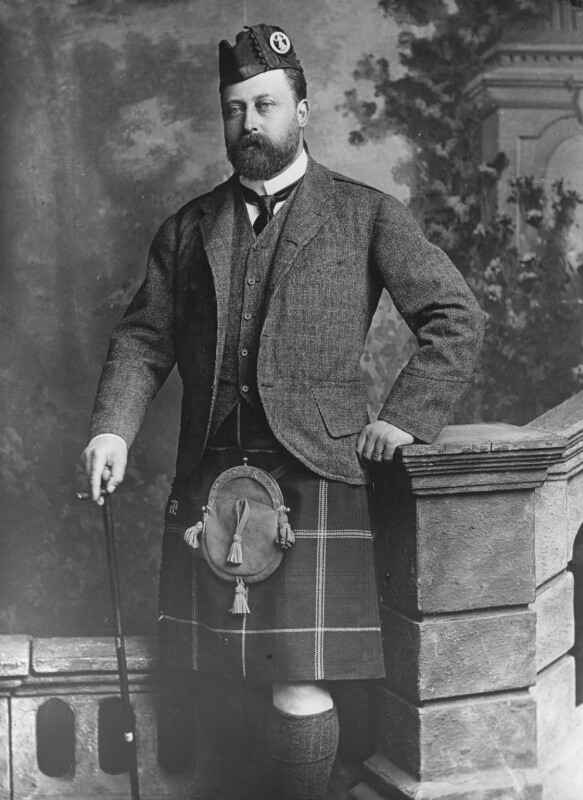
Whatever the origins of the habit, there is no 'rule' that demands that you leave said button undone. Look at the image below of a slim Edward VII (taken in 1882), what do you notice about the buttoning of his waistcoat / vest?

Edward VII Image National Portrait Gallery London

Waistcoats are often cut so that the bottom button can't be done up without affecting the line of the garment. That's a result of the convention. This is good enough reason to leave it undone; the cut makes it hard to do otherwise. My advice would be that, if the waistcoat is cut so that the bottom button can be done up, do just that. It will help cover your waistband and also look tidier (see the above image by Whitfield & Ward, Tailors (link below) - doesn't that look neat?) 

But however you want to play that one, there is no law, rule, etiquette, convention or tradition (going back to the recent complaint that I received) that demands that the bottom button of a cardigan be left unsecured. We often see buttons on cardigans (sleeved or sleeveless) left undone. This may be because the buttonholes have stretched and the buttons pop open, or it's an attempt at sprezzatura or in confusion over the waistcoat 'rules'. Or it may be that the cardigan is worn by a genuine sartorialist who has found the best way to wear the garment to make it look as good as possible - read on....

"If there are rules of style they are simply that you should wear clothes in a way that makes both the garment and you, the wearer, look as good as possible"

If there are any rules of style they are simply that you should wear clothes in a way that makes the garment look good and you, the wearer, feel comfortable. There are some ways of wearing clothes that look so bad that it's best to pretend there is a rule preventing them. Ties worn undone and at half mast look sloppy and it would look better to go tieless with collar undone. Wearing brogues without socks is a look has been overdone and is best avoided as it looks too studied. Wearing watches over shirt cuffs is just aping the style of Gianni Agnelli. Doing up the bottom button of a blazer or sports coat is inadvisable simply because doing so will usually spoil the line of the jacket because of its cut. But these are guidelines, not rules.

"The overarching question is not 'What is the rule?' but 'What looks best on you?'"

Good style arises from self confidence, wearing good quality clothes that fit well and, most importantly, not looking as if you've tried too hard. The best way to sprezzatura, the art of looking good without appearing to try, is to find your own style rather than copying slavishly what you see at Pitti Uomo or on Instagram or following irrational rules. 

The overarching question is not 'What is the rule?' but 'What looks best on you?'

[With thanks to Whitfield & Ward, Tailors, for permission to use their image above. This is an unsponsored post.]

Share:
Labels: menswear, style, style inspiration

Ralph Lauren Autumn Winter '22: Honouring Roots and British Style

Monday, 2 January 2023

For Autumn/Winter 2022 Ralph Lauren Polo (link below) say they honour their "roots of distinctive details, tradition in textiles, and time-honored tailoring". The two videos below show their collections for men and women. It's interesting to see the strong British influence that underlies the American Ralph Lauren brand: tweeds and cloths from British mills, country life and sports, mountains, rugby football, a classic Land Rover, the Aston Martin, a steaming cup of tea and the heritage of the English country house. 

Ralph Lauren Shetland Tweed Jacket - Abraham Moon & Sons England cloth

Ralph Lauren's preppy and Ivy League looks owe much historically to British styles. Ralph Lauren himself said in an interview with Esquire in 2014, "England has always inspired my style and designs, and my respect for things that have a quality the more they are worn. The British have a true appreciation for heritage and tradition...."

So, the U.S. Ralph Lauren brand oozes British menswear heritage and styles - what British brands do the same? See here for my thoughts on this question: British Style: Is It Time for a Revival?


See Ralph Lauren.
Share:
Labels: menswear, style, style inspiration

Evelyn Waugh: The Comfort and Style of a Tweed Suit

Tuesday, 27 December 2022

The Italian word 'sprezzatura' perfectly describes that rather dishevelled but Oh-so-English look of a well-used tweed suit, as worn with such aplomb by so many men in the early half of the twentieth century. I came across the image below of author Evelyn Waugh which perfectly illustrates that casual, crumpled and unselfconscious English style. How can we emulate that comfortable tweedy appearance today?

Evelyn Waugh by Mark Gerson 1963

Waugh's suit appears to be a heavyweight tweed (they would normally have been fairly robust cloth in those days) in a shepherd check. As is normal with a well-worn-in tweed, it looks as comfortable as an old jumper and pair of jeans might be to us today. Men were used to wearing tailoring in those days, and Waugh would have thought nothing of throwing himself down on the sofa for a post-prandial nap fully clothed in his three-piece.

It's this slightly disordered but so natural and unforced look, the result of wearing a suit day in and day out, that's often admired in the English (or more strictly British) man of that era. Sadly today's man has largely abandoned tailoring in favour of casual wear or that mix of leisure and sports wear, 'athleisure', that, while possibly easy to wear, lacks elegance or style. 

The art of wearing tailoring for relaxation has been lost and today it's felt that sloppy and shapeless is necessary for easy wear. Evelyn Waugh shows us that this is a mistaken view. Tweed is a casual cloth, designed originally for easy movement outdoors, retaining its shape and protecting the wearer from the elements. A good quality cloth is soft, robust and lightweight, moulding readily to the body. Its forgiving nature means that it doesn't need to be treated with care, like a flannel business suit. 

Worn well the tweed suit combines effortless style with comfort. Let's buy more tweed suits (I suggest some sources of new and vintage tweeds below).

Waugh wears a houndstooth check tweed suit with a jaunty buttonhole


Vintage Tweed Suits

If you like your tweed suit traditional and heavy duty, try a vintage example. I bought a Harris tweed suit that must have been over 60 years old some years ago. The tweed was very heavy and you will find this is common with older suits. After some alterations it fitted well, but was too warm for indoor wear. 

If you buy online check with the seller for moth holes, torn linings and a general smell of damp, age or mothballs. And of course you should ask for detailed measurements, comparing them to a suit that you know fits. Aim for minimal alterations as too great a change to size isn't always successful.

Here are a few links - you may find more:

Hornets Vintage
Savvy Row
Fogey Unlimited

New Tweed Suits

Any tailor will be delighted to make a tweed suit - whether made to measure of fully bespoke will depend on your budget and preferences. Ready to wear (RTW) is the affordable option and most stores and tailors will alter a suit to fit as well as possible. 

Here are a few suggested links - there are many more out there and I've confined myself to a few stores and tailors I know or have experience of:

Dege & Skinner for the full bespoke Savile Row experience and a suit that will fit to perfection.
Susannah Hall - British made suits.
Cordings of Piccadilly - their affordable RTW suits are made of the best tweed. They fit me perfectly, but they will alter for you if needed.
Campbell's of Beauly - in Scotland near Inverness: a tweed heaven offering RTW and bespoke tailoring. They specialise in estate tweeds. This is a topic on its own, but many Scottish sporting estates have since Victorian times developed their own tweeds, the colours and patterns reflecting the colours of their local rock, heather, water and skies.
Share:
Labels: British made, menswear, People, style, style inspiration

David Hockney's Yellow Crocs And Why is Menswear So Boring?

Tuesday, 20 December 2022

The recent sight of David Hockney wearing yellow Crocs at an Order of Merit meeting at Buckingham Palace caused a stir in the Press. Crocs - in front of His Majesty! 


As a man of style, King Charles took it all in his stride of course, commenting, "Your yellow galoshes! Beautifully chosen." But how significant is it that such a striking choice of footwear should make such an impact? Is it because many of us are now wearing menswear that is dingy, dark and dull; that we aren't used to seeing displays of sartorial sassiness in men? 

How often does what we wear reflect our personalities rather than simply an acquired look or trend?

Light in the gloom.
Hockney's Crocs (and the women) light up a monochrome OM luncheon meeting.

The above image of those attending the Order of Merit luncheon shows how men's formal business wear is traditionally dark: black or dark blues predominate. This is nothing new. Since the early nineteenth century most men have avoided colour and bright pattern, a trend marked by Beau Brummell's choice of plain and sober clothing. Victorian men adopted darker hues to emphasise their serious, god-fearing and industrious approach to life.

This continued into the twentieth century and, while the sixties signalled as temporary shift to colour and pattern for the young in particular, we seem to have returned to a period when both young and old prefer darker clothing, whether for formal or casual wear. Look at any high street, where drab hoodies, quilted coats and jeans predominate. Maybe this is a reflection of the times. Do we feel that here isn't much to be cheerful about in the world at the moment and does this reflect in our sober choices of clothing? 

Hockney's outfit at the OM luncheon is a welcome change. He has chosen to dress in a way that is comfortable and still reflects his character and interests. We may not all approve of the yellow Crocs, but the lighter coloured check tweed suit is a style that we could all adopt. Try patterned tweeds, bright knitwear, trousers in brighter hues, bold striped shirts and pastel contrasting socks to move away from this monochrome madness.

Share:
Labels: menswear, People, style, style inspiration

Marwood: Quality and Style

Friday, 16 December 2022

It's been a while since I caught up with Marwood, whose beautifully made and designed products combine style with quality. 


I asked Becky French, founder of Marwood, to bring us up to date:

DE: I've been following Marwood for many years now and indeed still wear a pair of your mohair socks that have outlived all my other socks by a factor of at least 10. Can you tell us something about Marwood and its products?

Becky: Thanks David. Yes Marwood’s mohair socks are very popular and it’s a shame to have run out of stock currently but I am hoping to replenish in the coming months and hold a sample sale of odd sizes for newsletter readers around Christmas. They are so soft, comfortable and legitimately last the test of time. I have had many emails and messages from people each year telling me how happy they are that it’s cold enough to wear the chunky ones again. It’s a good feeling to get such positive feedback.

I love to offer products that tick all the boxes. The aim is to create beautiful pieces in your wardrobe that you can’t quite find anywhere else… that is the main principle behind Marwood. At the moment a lot of the ties are one-of-a-kind and we are exploring made-to-order for next year. This adds to the uniqueness of our offering and hopefully shows we have a thoughtful approach to consumption.

DE: I've long admired your beautiful men's ties and see that you also sell homewear and lace - is there a common element to these different products?

Becky: Graphic geometric patterns, a monochrome palette (set amongst a rich array of colour), earthy textures and all made by traditional manufacturers in the UK. Our tagline is “outfitting life’s occasions” which gives me an open brief when it comes to designing products. We have an aesthetic and practical approach to a British lifestyle and all its occasions. We can cater to a black tie event or a walk in the hills in a meaningful way. We are looking to find the little corners of a person’s lifestyle that need some attention, hence why we ventured in to homeware as well. We are exploring an offering of textile art next.


DE: Is British manufacture and design important to you?

Becky: It has always been important for Marwood because we have made our products close to home with suitable makers that are the best at what they do. However I wouldn’t ever say we should only ever produce here. I am all about finding the best manufacturers for the job… keep products authentic to a manufacturer’s skillset and speciality. These relationships with suppliers are the backbone of any brand, so I believe in maintaining good, positive connections with our makers.

DE: You say that. 'We champion the idea of owning less and caring more about selective investment pieces'. How does this translate into the pieces that you sell?

Becky: I see our products as the opposite of fast fashion. They are thoughtfully designed and produced. The price point means they are an investment choice for most people, but I then think the lifespan of the products vouches for themselves. Marwood products have integrity.

DE: What is the future of Marwood?

Becky: I wish I could answer this but I just don’t know. It was such a fast growing, exciting business in its early years (since 2010), but then when wholesale business devolved, and I joined Turnbull & Asser five years ago, it became a side project. It is getting nurtured more now that I am freelancing for other brands and have more flexibility. I am enjoying the shoots (like this one with Rick Pushinsky and David Nolan) to bring some life back to the brand and the website and working with a small team of collaborators. At the end of the day, I love curating ranges, designing and making well-crafted pieces and connecting with people through imagery and art… so if Marwood continues to let me do this, then it will grow along with me. Let’s see what’s to come.

DE: Many thanks, Becky, for telling us about Marwood.

www.marwood.life
Share:
Labels: British made, menswear, style

Charles William Alexander: Well-Engineered Pyjamas

Thursday, 8 December 2022

Charles William Alexander is a new British brand making pyjamas differently. Founder Alex Massey founded the business after a background in engineering and construction, with a particular interest in classic Land Rovers. Using tools used in the automotive industry he designs the pyjamas so that they can be cut with minimal waste. 


Charles William Alexander Pyjamas

Interested in sustainable style and with a dislike of fashion's waste, Charles told me more about his thinking behind the business:

“The concept of CW Alexander came along around early 2021. I saw something that hadn’t been done before; this was very much engineer turned tailor.

From a young age I regularly helped my Mum sewing with many projects; I noticed the huge amount of waste in the fast fashion industry with the UK average of clothes only being worn twice before they were discarded.

CW Alexander Pyjamas have their own identities with a QR code tracking the manufacture date, place and style. One benefit of slow fashion pyjamas & underwear is they tend to be worn longer and not viewed as an "Accessory" that can only be seen once and is no longer useable. Choosing to give each set of pyjamas an identity gives the owner a connection to their purchase and a sense of ownership of something special, something unique, something that can be passed down.”
The pyjamas come in bright seventies colours with contrasting piping, such as the red I wear here. Made in the USA (where, as Charles points out, the seamstresses are paid fair wages) they are unisex, stylish and comfortable. A donation from each sale goes to Alzheimer's Research UK.

For more information and to buy, go to Charles William Alexander


Share:
Labels: accessories, menswear, style

From Formal to Casual With Denim & Chambray Shirts

Tuesday, 6 December 2022

The suit has had a hard time over the two or three years, with many forecasting its demise. My own view (link below) is that the suit survives, albeit in a modified form and here setbacks provide opportunities. Select the right shirt and you can change a suit's look to make it more versatile, as I show  you here.

I'm grateful to Thomas Pink shirts for sending me a denim and a chambray shirt to illustrate this feature. 

Thomas Pink denim shirt

Same suit; different looks. Chambray and denim shirts from Thomas Pink

While the formal business suit is undoubtedly on the wane, suits with a more comfortable cut and cloth can be worn either formally or casually, as the opportunity demands. Take a tweed or Prince of Wales check suit: worn with smart oxford shoes, a crisp white shirt and madder silk tie it can be worn to a formal or work meeting, but wear it with loafers, a denim or chambray shirt, cravat or neckerchief and it becomes a comfortable option for a  more casual look.

Denim and chambray reduce the formality of tailoring because they are both cloths with roots in workwear. Such shirts look more comfortable than a crisp business shirt made from a fine poplin, oxford or Sea Island cotton. As they age they soften and take on a patina of wear at the collar, seams and folds. A slight fraying at the edges adds to this comfortable look and is a godsend for those aiming to exude an air of sprezzatura*. 

Denim or Chambray?

Denim and chambray are woven from two different coloured yarns, usually indigo and white, giving them their characteristic slubby appearance. They are woven differently: denim tends to be thicker than chambray and has a different appearance on each side of the cloth, while chambray looks the same each side. Denim tends to fade much more markedly and this makes it the more casual looking of the two, particularly with its association with workwear since the nineteenth century and earlier. Due to its lighter weight and breathability, chambray is better for warmer weather.

*Sprezzatura: 'Studied carelessness'.

The shirts used in this post were from Thomas Pink

Share:
Labels: menswear, style, style inspiration

Heron's Ghyll: British-Made Tailored Elegance

Monday, 28 November 2022

Heron's Ghyll was founded in 2020 by Mark Francis in London and it takes that city's tailoring heritage and adds a romantic, cosmopolitan touch to produce clothes that don't fit any particular mould, but can be adapted to the needs and wishes of the wearer.

Heron's Ghyll: left blue & white striped linen. I wear (right) check lambswool Nehru

Mark sent me a sample Nehru jacket to try. I could wear it as streetwear with jeans, but decided that, with party season coming up, I'd style it for the usual (and rather meaningless) 'smart casual' or 'cocktail' or similar dress codes that accompany seasonal invitations.

The Purple Check Extrafine Lambswool Blazer that I borrowed is beautifully made, part-lined with silk and adorned with gold buttons. Worn with dress trousers, patent slippers and a while silk shirt it would pass muster for a black tie do. Paired with a lightweight roll neck sweater, jeans and suede loafers you could lunch with a friend at your local hostelry.

I wear Heron's Ghyll check lambswool Nehru jacket

Other jackets (some with matching trousers) come in wool, linen, denim, cotton, cashmere cotton or seersucker as Glen check, stripes, polka dots and plain fabrics, so there is something for every occasion and taste. They are mostly made to order, with delivery times around 4 weeks.

For more information about Heron's Ghyll, their jackets, matching trousers and accessories go to Heron's Ghyll.

Share:
Labels: British made, menswear, style

Grenson Shoes: British Made

Wednesday, 23 November 2022

Grenson are a British brand who've been making shoes in Northamptonshire since 1866 and now also make overseas to ensure a wider choice to customers. I've not tried their products properly before and they kindly loaned me two pairs of shoes for this feature.

Wearing Grenson Archie triple-welted grain leather brogues

Grenson Archie (left) and Winchester (right)

I was keen to try the triple-welted Archie brogue and the black Winchester derbies, both made in Grenson's Northamptonshire factory. The Archie is an archetypal rubber-soled grain leather country shoe, robust and chunky and ideal for casual wear. The Winchester is a versatile and elegant leather-soled black calf shoe from the Classics Collection. While I'd wear it for business or, highly polished, with formal wear such as black tie the Winchester would also look good with denims or cords.

Styling the Grenson Archie brogue and Winchester derbies

Both shoes are beautifully made from excellent quality leather. I was only able to try them on carpet, but have little doubt that they are comfortable to wear. The two styles of shoe would make the perfect capsule footwear collection for almost every occasion. Their Goodyear welted construction means that they can be repaired multiple times, making them an good investment for the future if properly looked after with shoe trees and regular waxing and polishing.

Great shoes which I'll be reluctant to return. For more information and to buy, see Grenson Shoes.

Links:

Grenson Archie

Grenson Winchester


Share:
Labels: British made, menswear, style

Colhays: British Made Knitwear

Monday, 21 November 2022

Colhays is a relative newcomer to the British-made knitwear scene. This is a crowded market and founder Ronnie Chiu has chosen to get round this potential problem by aiming unapologetically at the luxury end of the market. Furthermore his designs take a fresh look at shapes, colours and textures so that everything is very wearable and yet unique in feel or shape.

Ronnie Chiu founder of Colhays


I prefer not to write about products I haven't seen, handled and worn fairly extensively, but I was able to try these products at a press day. Knitwear is one of this things that has to be touched and tried to really appreciate and these are sumptuous in feel, quality and weight. 

Ronnie Chiu based his approach on two Scottish-made sweaters that his father bought with his first paycheck in the 1970s and still in existence. He determined to make quality and longevity a central part of Colhays - knitwear that could be passed through the generations.

Ronnie says:

“ My passion is in bringing back heirloom quality clothes that stand the test of time, the kind my grandfather and father would have worn and passed onto me, but making them relevant to people today by updating the styles and fits. My hope is to restore the relationship that once existed between craftsman and wearer by bringing to your attention the quality, care and expertise that have gone into every stage of manufacture - from the fibres used, to the skills of those who have created your garment; what makes the garment last so long. I think that you deserve to know, and the makers’ stories deserve to be heard.” 

From what I've seen of Colhays' products (links below), Ronnie has achieved what he set out to do and these are clothes that would be appreciated by anyone looking for British-made lasting high quality knitwear.

Trying Colhays' impressive knitwear products 

For more information go to Colhays website.

Share:
Labels: British made, menswear, style

Sustainable Style: Neem London Pop Up Store in London

Wednesday, 16 November 2022

Neem London are displaying their sustainability credentials at a pop up store in Piccadilly Arcade London until Christmas, giving us the opportunity to see their wares at first hand.

I've talked a lot about Neem here on the blog. In a menswear world corrupted by greenwashing, inaccurate claims about ethical and environmental credentials, Neem is a brand that does its best to minimise the adverse aspects of clothing production. 

Wearing a Neem London Recycled Italian Sky Dobby Popover Shirt

Neem uses recycled materials, regenerative cotton and ethically produced merino wool in a range of comfortable and stylish shirts and accessories ideal for casual and smart wear. Furthermore, you can send your unworn clothes for recycling in return for credit to spend at Neem.

The pop up store is a curation of ten brands alongside Neem London, all with the emphasis on sustainability. One brand is Vyn Switzerland a Swiss brand who make sneakers in Italy that have components that can be exchanged when worn, so extending the life of the shoe.

The Neem + pop up store at 7 Piccadilly Arcade until Christmas

Visit the Neem London pop up at 7, Piccadilly Arcade, London SW1Y 6NH for the ten weeks up to Christmas. See Neem London for more information on the store and the brand.

This is a sponsored post.

Share:
Labels: menswear, style, sustainable style
Home
View mobile version
Older Posts
Subscribe to: Posts (Atom)

Vuelio Top 20 Fashion Blog 2023

Vuelio Top 20 Fashion Blog 2023

Follow

Search This Blog

Popular Posts

  • The Grey Fox Shop re-opens - my favourite products chosen for you
    Some hard work has brought the re-opening of the Grey Fox Shop , giving me the chance to offer blog readers a constantly-changing selection...
  • The New Land Rover Defender After Three Years
    A year ago I reported (below) on my first two years ownership of the new Land Rover Defender, which I bought in late 2020 and which was deli...
  • The Rules of Style & Buttoning Your Waistcoat
    From time to time people contact me to complain about one or other aspect of a look that I've posted on Instagram. The last I received t...

Categories

  • People
  • lifestyle
  • style

SARTORIALAB

SARTORIALAB
Personal Styling Service

Grey Fox on Pinterest

Visit Grey Fox's profile on Pinterest.
Powered by Blogger.
© Grey Fox · Theme by xomisse